The radiologist sees the scan. The pathologist down the hall doesn't. When ransomware hits, nobody does.
Before Imaging Goes Dark
The Executive Masterclass on Enterprise Imaging, Infrastructure and Cyber Resilience
Every image · Every department · Real-world lessons from three healthcare technology leaders
Most hospitals don't run one imaging system. They run dozens: radiology, cardiology, pathology, endoscopy, wound photos on a phone, ultrasound at the bedside. Each one stored, secured and recovered differently.
The technology to fix this already exists. What's missing is the plan, and leaders who can connect imaging, infrastructure and security into one decision.
- See where your images really live, including the systems nobody put on the inventory
- Understand what imaging costs you to store, secure and recover, and who owns each decision
- Leave with ten questions to ask about your own imaging, before an outage asks them for you


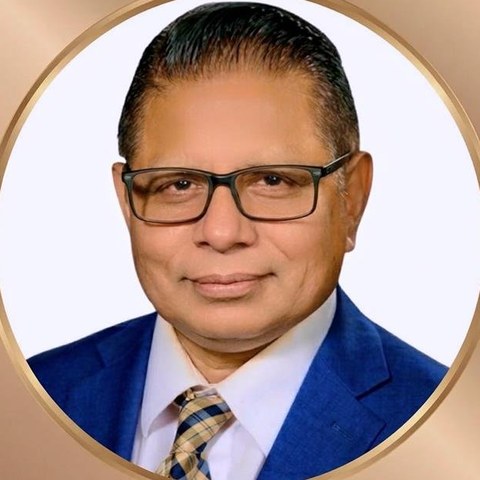 Founding Faculty: Philip Gelda, Thomas M. Dewar and Alim Abdul. Real-world lessons from three healthcare technology leadersEnterprise imaging and PACS · Healthcare infrastructure and clinical systems · Cybersecurity and resilienceMeet the faculty ↓
Delivered live online by U.S.-based AABGM Inc. Vendor-neutral. No sales pitch.
Save your seat
Reserve one of 50 seats. No payment now: we email you a secure payment link for USD 1,499 within one business day, and your seat is confirmed once payment is made.
You're on the list
We'll email your USD 1,499 payment link from info@aabgm.com within one business day. Your seat is confirmed once payment is made, and the date and joining link follow.
Founding Faculty
The people who moved the images
Real-world lessons from three healthcare technology leaders who worked side by side through major hospital technology transformations during the pandemic.
Founding Faculty
Philip Gelda
Lead Instructor: Enterprise Imaging & PACS Strategy
Founder & Managing Partner, Tivoli Technologies · Former Healthcare CIO
More than 40 years in healthcare technology, including CIO and interim CIO roles, and founder of the healthcare technology consultancy Tivoli Technologies. He has led PACS consolidations and image migrations for health systems across the country, moving millions of imaging studies through mergers and acquisitions, implementing cloud-based PACS and putting cloud copies of image archives in place for backup and recovery. He managed the PACS implementation and 1.7 million study migration for the three-hospital merger in Brooklyn.
Founding Faculty
Thomas M. Dewar
Lead Instructor: Healthcare Infrastructure & Clinical Systems Transformation
Former Healthcare CIO
More than 25 years leading technology in healthcare and human services, including CIO roles at four organizations. As Director of Infrastructure for a three-hospital merger in Brooklyn, he led the technical teams that moved all three hospitals onto one EHR and from three PACS systems to one. He has also led a cloud PACS rollout for a multi-state urgent care provider, and digital and AI-enhanced pathology projects as a laboratory CIO.
Founding Faculty
Alim Abdul
Lead Instructor: Cybersecurity, Governance & Resilience
Founder & CEO, AICRRQ Inc.
More than 30 years leading technology, cybersecurity and disaster recovery programs in healthcare, government, finance, media and hospitality. He has held senior leadership roles, including AVP at two New York health systems, where he led the modernization of their disaster recovery programs. He holds the CISSP, CISM, CISA, CRISC and CCISO and is an EC-Council Certified Instructor.
The problem
Your electronic health record is not your image archive
The record shows the order and the report. The images live somewhere else, often in many places. Enterprise imaging platforms, vendor-neutral archives and universal viewers already exist. The hard part is deciding what to consolidate, what to retire, and how to keep it all running when something fails.
Departmental silos
Cardiology, pathology, endoscopy and dermatology often keep their own systems. A clinician comparing a prior study may have to open several of them.
Migrations and lock-in
Moving images between vendors is slow and costly. The contract you sign today decides how hard it is to leave in seven years.
Security gaps
Imaging servers and viewers keep showing critical vulnerabilities, and some are still reachable from the internet.
Recovery comes last
After an attack, imaging is often restored late. Reading rooms go dark while care continues.
The masterclass outline
Five sessions. Ten hours. One plan you can use.
Each two-hour session has a short expert lesson, a roundtable with all three faculty, a practical exercise on a fictional health system, and a security and recovery checkpoint. No slide-reading.
- 1The hidden imaging estateSession 1 · 2 hours · Led by Philip Gelda, with Thomas M. DewarSee every place your organization creates and stores images, and why consolidation is a strategy decision before it is a product decision.
- How PACS, VNA, enterprise imaging platforms and universal viewers fit together, in plain English
- Radiology is only the start: cardiology, pathology, endoscopy, dermatology, wound photos and bedside ultrasound
- DICOM and non-DICOM images, and why the difference drives cost and risk
- Where the electronic health record ends and the image archive begins
- 2Strategy, governance and buying rightSession 2 · 2 hours · Led by Philip Gelda, with Alim AbdulDecide who owns imaging, what you keep and for how long, and how to choose a platform you can leave.
- Setting up an imaging council with clinical, IT, security, compliance and finance seats
- Retention rules, a 10-year data strategy and a 3-year technology roadmap
- Vendor selection: requirements, demos, scoring and due diligence
- Security questionnaires, business associate agreements, exit rights and total cost of ownership
- 3What it runs onSession 3 · 2 hours · Led by Thomas M. Dewar, with Philip GeldaBuild the infrastructure, integration and identity foundations that keep images fast, available and affordable.
- Storage growth, cloud or on premises, and the costs that appear years later
- Integrating imaging with the electronic health record: orders, results and image links
- Identity, access and patient identity across hospitals
- Digital pathology and AI: very large images, new interfaces and governance
- 4Moving the dataSession 4 · 2 hours · Led by Philip Gelda and Thomas M. DewarPlan migrations that clinicians can trust, and actually retire the old systems.
- Lessons from multi-hospital PACS consolidations and million-study migrations
- Validation sampling, reconciliation and patient-identity mismatches
- Cutover, parallel running and downtime during migration
- Decommissioning legacy systems on schedule
- 5When imaging goes darkSession 5 · 2 hours · Led by Alim Abdul, with Philip Gelda and Thomas M. DewarKeep imaging available through outages and ransomware, and know the first decisions before you need them.
- Why imaging is often restored late, and what that means for patient care
- Exposed imaging systems, backups that cannot be altered, and tested restores
- Downtime viewing, recovery order and clinical communication
- HIPAA requirements and the direction of proposed rule changes
You leave with
- Imaging inventory template
- Imaging council charter
- Vendor scoring matrix, security questionnaire and contract checklist
- Storage growth and total cost calculator
- Migration readiness checklist and risk register
- Imaging downtime and recovery playbook template
- A 90-day action plan for your organization
- Ten questions to ask about your imaging
- Certificate of completion
Sessions are live online and recorded for registered participants. Dates to be announced to registrants first.
Who it's for
For the leaders who own the decision, and the ones who live with it
CIOs and CTOs
Who fund the platforms and carry the infrastructure.
CISOs and security leaders
Who must protect and recover systems they rarely see.
Clinical and department leaders
Radiology, cardiology, pathology and others whose work depends on the images.
COOs, compliance and finance
Who answer for cost, retention, risk and continuity.
No technical background required. Imaging informatics, PACS and infrastructure teams are welcome too.
After the masterclass
Go deeper when you're ready
For your organization
Enterprise imaging assessment
A structured review of your own imaging estate, governance, migration risk and recovery readiness, delivered by the same faculty. Separate from the masterclass and scoped by agreement.
For one organization
Private sessions and workshops
The full masterclass for one organization, or a one-day imaging resilience workshop for your leadership team, built around your own systems.
Ask about a private sessionQuestions
Before you join
What does it cost, and how many seats are there?
USD 1,499 per person, capped at 50 seats so everyone can take part in the roundtable. Reserve with the form, and we email you a secure payment link. Your seat is confirmed once payment is made.
Will you try to sell me a product?
No. The masterclass is vendor-neutral. We don't sell imaging software, and no vendor sponsors or endorses the session.
What if I miss a session?
Every session is recorded for registered participants, so you can catch up before the next one. The live exercises are where most of the learning happens, so join live when you can.
Do I need a technical background?
No. It is written for leaders. Technical staff are welcome and will find plenty to take back.
Do I have to share details about my organization?
No. The roundtable uses a fictional health system. Never share patient information, passwords or details of a live incident in the session.
Is this a certification?
No. It is an educational program. You receive a certificate of completion, which does not grant a professional certification or replace credentials such as the CIIP.
Ask the questions before the outage asks them for you
Before Imaging Goes Dark. Five live sessions, 10 hours, for healthcare leaders. USD 1,499, capped at 50 seats.
Questions? Call +1 631 400 9017 or +1 929 229 5703, or email info@aabgm.com